

Introduction
Environmental, social, and governance (ESG) reporting is entering a more demanding phase, where broad sustainability statements are no longer sufficient. Businesses are increasingly expected to show reliable data, clearer methodologies, stronger governance, and measurable progress across the ESG areas.
In Singapore, sustainability reporting is also becoming more structured. Climate-related disclosures and Scope 1 & 2 greenhouse gas emissions reporting are taking on greater importance for listed companies.
For businesses, the future of ESG reporting involves more than regulatory compliance. It requires flexible reporting systems that can keep pace with changing standards, stakeholder expectations, and business needs. Starting assurance preparations early can help companies build reliable processes, maintain traceable ESG data, and produce information that is ready for review.
Key Takeaways:
- The future of ESG reporting will place greater weight on evidence, not broad statements.
- Companies should start organising ESG data before assurance becomes a formal requirement.
- Clear ownership, source documents, review procedures, and documented assumptions make ESG reports easier to defend.
- SMEs can begin with practical records they already have, such as utility bills, HR data, supplier information, and safety logs.
- Professional support can help businesses turn fragmented reporting habits into a more reviewable and reliable process.
The Future of ESG Reporting: Moving From Annual Disclosure to Ongoing Accountability
What Local Regulations Mean for Your Timeline
Singapore’s ESG reporting requirements are becoming more structured, particularly for climate disclosures. Even businesses that are not yet subject to mandatory rules may face growing expectations from investors, lenders, customers, and supply chain partners.
For Singapore Exchange-listed companies, ESG reporting obligations are already becoming more specific.
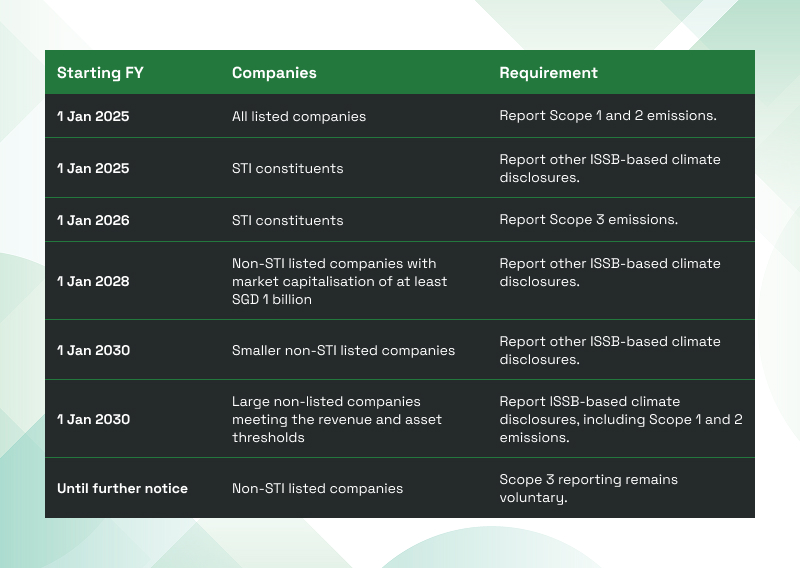
Starting from Financial Year (FY) 1 January 2025:
- All listed companies: Report Scope 1 and Scope 2 greenhouse gas emissions.
- Straits Times Index (STI) constituents only: Report other ISSB-based climate-related disclosures.
Starting from FY 1 January 2026
- STI constituents only: Report Scope 3 greenhouse gas emissions.
Starting from FY 1 January 2028
- Non-STI listed companies with a market capitalisation of at least SGD 1 billion: Report other ISSB-based climate-related disclosures.
Starting from FY 1 January 2030
- Smaller non-STI listed companies: Report other ISSB-based climate-related disclosures.
- Large non-listed companies with at least SGD 1 billion in annual revenue and SGD 500 million in total assets: Report ISSB-based climate-related disclosures, including Scope 1 and Scope 2 emissions, unless exempted.
Scope 3 Reporting For Non-STI Listed Companies
- Remains voluntary until further notice.
- Companies may still need to provide emissions and value-chain data to investors, customers, or supply chain partners.
The wider direction is clear: corporate sustainability disclosure is moving beyond broad statements towards measurable performance. Companies are expected to track relevant data, report meaningful metrics, explain their methods, and align their disclosures with recognised standards.
How ESG Reporting Is Evolving in the Future
In the future, ESG reporting will require companies to explain how they identify ESG issues, oversee the reporting process, document changes in methodology, and verify the information disclosed. This is a different discipline from preparing a polished narrative close to publication.
ESG Reporting Is Becoming a Business Accountability Tool
For businesses, the future of ESG reporting makes sustainability reporting part of accountability. A credible report should show how ESG matters are identified, managed, reviewed, and improved over time. This helps investors, customers, lenders, regulators, employees, and business partners assess the company’s governance maturity, risk awareness, long-term resilience, and ability to operate responsibly.
Reports Are Expected to Show Progress, Not Just Intentions
ESG claims carry more weight when they are supported by clear data and evidence. Instead of simply stating that emissions have been reduced, a company should explain what was measured, how the figures were calculated, and how progress is monitored. Any estimates, assumptions, or changes to the reporting boundary should also be disclosed. The future of ESG reporting will favour companies that can clearly connect their claims with evidence and decision-making.
ESG Information Is Becoming More Relevant to Business Decisions
The future of ESG reporting is also about internal value. When treated as management information rather than only disclosure material, ESG data can reveal operational inefficiencies, workforce concerns, supply chain risks, and governance gaps that financial data may not show.

How ESG Reporting Processes Will Change in the Future
The future of ESG reporting will make last-minute data collection harder to verify, explain, and support during internal review or external assurance. Many companies still prepare sustainability reports by gathering information near the end of the reporting period, but this approach increases the risk of missing documents, inconsistent figures, unexplained variances, and rushed statements.
Reporting Will Move From Last-Minute Collection to Regular Monitoring
Businesses should review ESG data throughout the year to identify missing records, errors, and unusual changes before reporting deadlines. For example, quarterly electricity reviews may uncover missing bills, new facilities, or unexpected increases in usage. A strong sustainability reporting process does not require expensive software and can begin with a reporting calendar, assigned data owners, standard templates, and clear records of where each figure comes from.
Ongoing Review Will Improve Report Reliability
Monthly or quarterly checks allow companies to identify inconsistencies before they become larger reporting issues. Conflicting headcount figures, missing supplier declarations, or unusual changes in fuel consumption are easier to investigate when the source teams can still recall the reason. Good ESG data quality depends on complete records, consistent definitions, documented calculations, and clear reviews. For SMEs, a simple tracker can record the data owner, supporting documents, review status, and assumptions used.
Reporting Systems Must Be Flexible Enough to Reflect Business Changes
As companies grow or change their operations, ESG reporting boundaries may also shift. For example, a new warehouse may need to be added to the reporting scope, while outsourced logistics may affect Scope 3 reporting. The future of ESG reporting will require systems that can handle these changes without losing year-on-year comparability. Companies should record boundary decisions, baseline changes, and calculation updates clearly so future readers understand why figures moved.

Governance, Skills, and Internal Capability Will Become More Important
The future of ESG reporting will depend not only on frameworks or data systems, but also on the people who prepare, review, challenge, and use ESG information. A company may have a reporting template, but weak governance can still lead to unclear ownership, incomplete checks, and unsupported disclosures.
Boards and Management Need Stronger ESG Understanding
Boards and senior leaders do not need to manage every calculation, but they should understand ESG reporting well enough to ask practical questions, such as:
- Is the reporting boundary clear?
- Are significant assumptions documented?
- Who has reviewed the data?
- Do the disclosures align with what the business actually does?
- Are there material risks that should be escalated?
Leadership should review the processes behind ESG reporting, not just approve the final report.
Teams Across the Business Will Need Upskilling
As the future of ESG reporting becomes more detailed, teams need to know what information to collect, how to document it, and why it matters. For example, a department may not realise that a missing invoice or inconsistent staff count could affect the final disclosure. Upskilling should therefore cover data definitions, source-document requirements, review responsibilities, and the steps for escalating unclear or incomplete information.
ESG Reporting Will Require Cross-Functional Ownership
Credible ESG reporting depends on collaboration across departments. If no one owns a metric, the reporting team may spend time chasing figures without knowing whether the information is complete or accurate. Clear ownership reduces this risk by ensuring someone is accountable for the accuracy and completeness of ESG information.
Building Assurance-Ready ESG Reports Before Requirements Tighten
How to Ensure Reporting Discipline for Assurance-Ready ESG Reports
The future of ESG reporting will expose weak habits that were easier to overlook when sustainability disclosures were shorter and less data-driven. Poor documentation, unclear assumptions, and inconsistent review practices are difficult to fix at the final reporting stage.
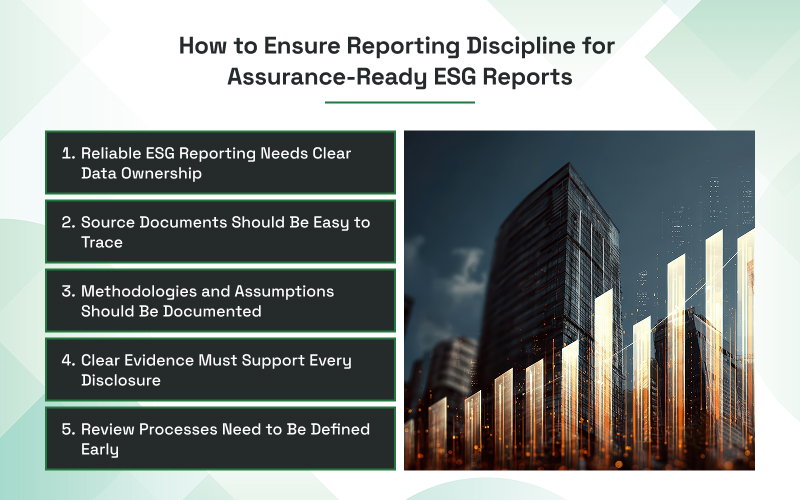
Reliable ESG Reporting Needs Clear Data Ownership
Each ESG metric should have a named owner, such as finance, human resources (HR), operations, or compliance. The reporting team should also record who provides the data, where it comes from, how often it is updated, and who reviews it before publication.
Source Documents Should Be Easy to Trace
Assurance-ready information should be linked to reliable source documents. These may include invoices, utility bills, payroll records, HR reports, supplier declarations, and training records. Clear ESG documentation makes evidence easier to find and questions easier to answer.
Methodologies and Assumptions Should Be Documented
Some ESG figures involve estimates, assumptions, or calculation choices. These should be documented so management and reviewers can see how the information was produced. This is especially important for emissions calculations, supplier data, reporting boundaries, and year-on-year comparisons. A calculation without explanation may be difficult to review later, even if the number itself was prepared in good faith.
Clear Evidence Must Support Every Disclosure
As ESG reporting faces closer scrutiny in the future, businesses need evidence behind their statements. Claims about emissions reduction, employee welfare, workplace safety, board oversight, or governance improvements should be supported by records. For example, staff training claims may require attendance logs, policies, or HR records. Without evidence, disclosures can appear vague or difficult to verify.
Review Processes Need to Be Defined Early
Assurance-ready ESG reporting depends on clear internal review. Companies should define who prepares the data, who checks it, who approves it, and how issues are escalated before publication. By reviewing the evidence before drafting the report, teams can assess the information objectively and enhance management’s confidence in the final disclosure.
How ESG Data Will Become More Detailed and Technology-Driven
The future of ESG reporting will require businesses to manage more detailed data across operations and value chains. This includes supplier information, Scope 3 emissions, site-level performance, product-level data, and activity-based emissions.
Scope 3 and Supplier Data Will Become More Important
Companies will need better visibility beyond their own operations, especially across suppliers, logistics providers, and other value chain partners. Even where Scope 3 reporting is not yet mandatory for certain companies, supplier and customer expectations may still create pressure to provide relevant information.
Where direct data is unavailable, businesses may need to use estimates. These estimates should be transparent. The company should record what data was used, where it came from, what calculation method was applied, and what limitations remain.
This especially matters for businesses that supply larger companies. A corporate customer preparing its own sustainability report may request emissions, labour, or governance information from its suppliers. SMEs that already keep organised records will be in a stronger position to respond.
Granular Carbon Data Will Support Better Decisions
A single corporate emissions figure may not tell management where to act. More granular data can show whether emissions are concentrated by site, activity, product, supplier, vehicle type, or business unit.
This level of detail supports more practical decisions. A company may identify that one site has unusually high electricity usage. For instance, a logistics-heavy business may see that delivery routing or fuel consumption deserves closer review.
Granular data also helps businesses explain progress more clearly. Instead of making broad claims, the company can show where changes were made, what the data indicates, and what remains under review.
Technology Will Improve ESG Data Management
Centralised systems, automation, and digital tools can strengthen ESG data management. They help reduce manual errors, improve version control, organise source documents, and make trends easier to analyse.
However, technology does not replace governance. While a system can store data, it cannot assess whether boundaries, assumptions, and disclosures are appropriate. Companies still need clear data owners, consistent methodologies, review procedures, and management oversight.
For SMEs, the starting point may be a structured spreadsheet and disciplined record-keeping. As reporting becomes more complex, the company can consider whether more advanced tools are needed.
How Professional Support Fits Into the Evolution of ESG Reporting
The future of ESG reporting may feel challenging for businesses that are still building internal reporting capability. Data quality, documentation, reporting boundaries, emissions calculations, review processes, and assurance readiness can be difficult to manage without a clear structure.
Engaging professional accounting services can be useful in the process. Accountants, auditors, and assurance professionals can review how ESG information is collected, verified, documented, and approved before reporting.
Identifying Gaps in ESG Reporting Processes
Professional advisors can help businesses identify gaps that may not be obvious internally. These may include unclear data ownership, inconsistent methodologies, missing source documents, weak approval trails, or figures that cannot be traced back to reliable records.
When engaging an accountant in Singapore, businesses should consider how financial discipline supports ESG readiness. Advisers who understand business records, internal controls, and assurance expectations can help strengthen the reporting process.
For ESG reporting, this matters because many of the foundations are not abstract sustainability concepts. They sit within the company’s everyday records, controls, documentation, and review habits.
Building Assurance Readiness Early
For companies preparing for sustainability report assurance, early guidance can reduce last-minute pressure. Rather than treating ESG reporting as a year-end exercise, businesses can build stronger habits throughout the reporting period.
This may include setting up reporting templates, defining source documents, assigning owners, reviewing calculations, documenting assumptions, and preparing evidence files. These steps can support future assurance services by simplifying information for easy review.
Businesses seeking support from a chartered accountant Singapore team should look for practical guidance that fits their reporting maturity. Smaller companies may first need clearer documentation, consistent data definitions, and a practical review process that can grow with their operations.

Frequently Asked Questions
1. Why is ESG reporting becoming more demanding?
In the future, ESG reporting is becoming more demanding because stakeholders no longer want broad sustainability statements alone. Investors, regulators, customers, lenders, and business partners increasingly expect ESG information to be measurable, consistent, and supported by evidence.
2. Why should businesses prepare for assurance readiness before it is required?
Assurance readiness takes time because it depends on how ESG data is collected, documented, reviewed, and stored throughout the year. If businesses wait until assurance is required, they may struggle with missing records, unclear calculations, or inconsistent methodologies.
3. How can SMEs start improving ESG reporting without overcomplicating the process?
SMEs can start by focusing on the ESG data they already have, such as utility bills, payroll records, HR information, procurement data, and workplace safety records. The priority is to assign clear data owners, keep source documents organised, and review information regularly.
Conclusion
The future of ESG reporting will place a great emphasis on stronger data, clearer standards, and better oversight. Businesses that prepare early will be better positioned to respond to changing requirements and stakeholder scrutiny.
Assurance readiness starts now because credible ESG reporting cannot be built at the final reporting stage. It depends on everyday practices: how data is collected, stored, reviewed, documented, and used for decision-making. For Singapore businesses, especially SMEs, building these foundations early can reduce future ESG reporting pressure and support stronger, more trustworthy sustainability disclosures.
Credo Assurance supports businesses that want a more structured approach to ESG reporting readiness. With more than 18 years of experience, our team of chartered accountants in Singapore supports businesses in reviewing their ESG reporting processes, documentation, controls, data ownership, and supporting evidence to identify gaps before the final report is prepared.
Our accounting firm provides practical guidance based on each company’s size, reporting maturity, and regulatory exposure. By strengthening the systems behind ESG disclosures, businesses can prepare for closer scrutiny, changing reporting requirements, and future assurance needs with greater confidence.
For companies unsure where to begin, contact us to make your ESG reporting more structured, reviewable, and useful.